October 14, 2026 • 8 Min Read
July 3, 2026 • 8 Min Read
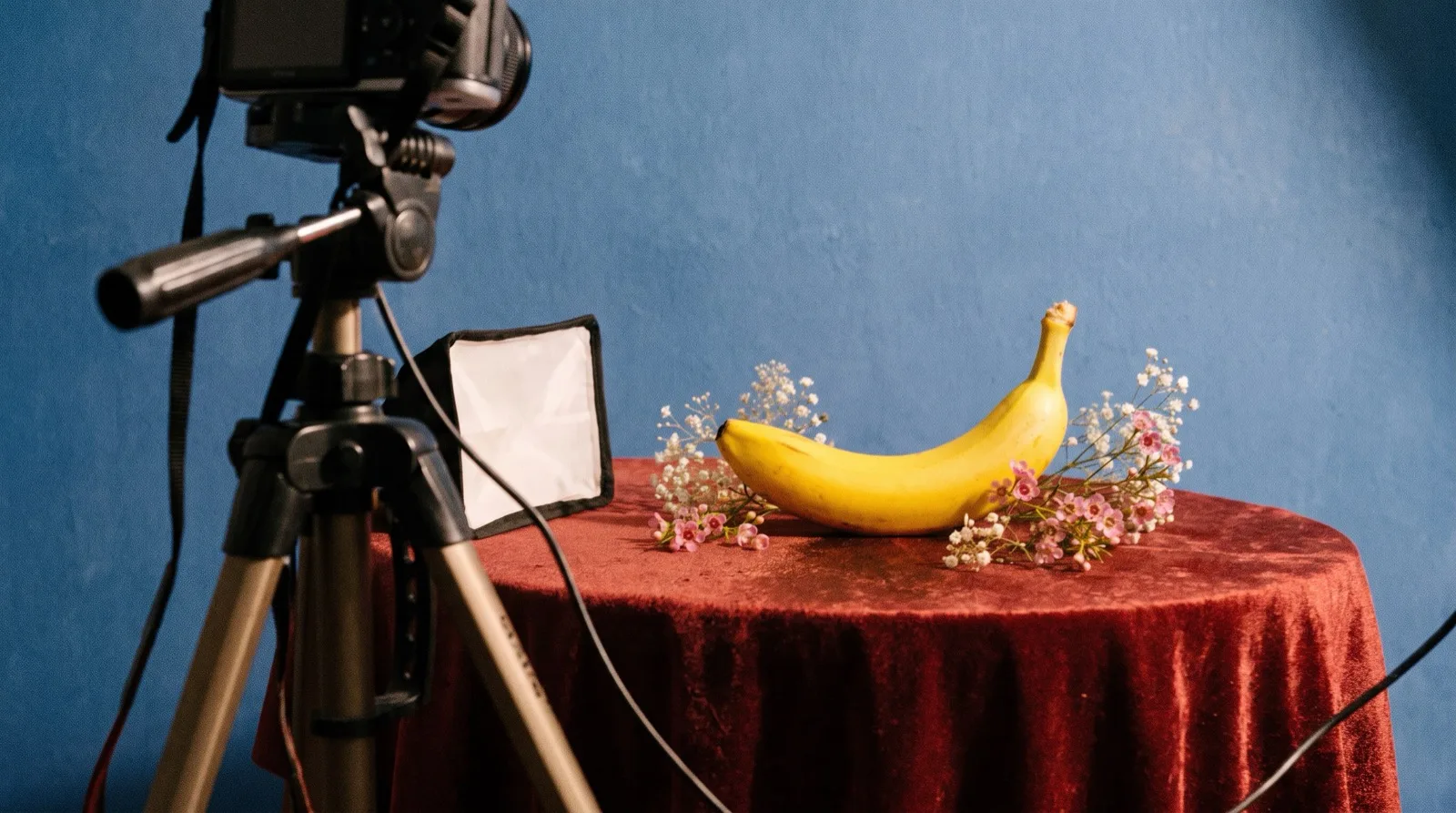
Google's Nano Banana model family has been at the frontier of image generation. The three frontier Nano Banana models are all built for a different job. Nano Banana Pro is the one for polished commercial work that needs consistent branding and readable text. Nano Banana 2 is faster and leans cinematic. Nano Banana 2 Lite is for cheap, quick iteration, usually under ten seconds a go.
At Melius we route across every major image and video model rather than betting on one. That gives us a view most people don't have. We can see which model someone picks, what they make with it, how long they wait, and how the choice changes with the job. Here is what our generation data says about the Nano Banana family, and where the real usage parts ways with the leaderboards.
There are three models in the family, and each one trades speed for quality differently.
Model | Best for | Relative speed | Signature use |
Nano Banana Pro | Polish & brand fidelity | Slowest | Campaigns, product & food shots, in-image text |
Nano Banana 2 | Creative exploration | Fast | Cinematic frames, concept art, characters |
Nano Banana 2 Lite | Quick iteration | Fastest | Rapid prototyping tests |
The speed differences track the lineup almost exactly.
Lite is much faster, roughly three to four times quicker than the others. Pro is the slowest on average, which is what you'd expect from a reasoning model. Look at the medians, though, and Pro (28.8s) and Nano Banana 2 (21.5s) aren't far apart. The difference is in the tail. Pro has more very slow jobs, and those tend to be the complex compositions where it spends longer working through the image.
Two caveats. These are end-to-end times that include any queue wait, not pure model inference. And Lite's sample is small, only 238 jobs, so treat its numbers as rough.
Latency tells you what a model can do quickly but the prompts tell you what people actually reach for it to do, and here the three variants split apart more than we expected.
Our data shows how people use these models. Public benchmarks show how the general public perceives the quality of these models in blind head-to-head voting. On text-to-image, the order inside the family is a bit surprising.
Editing flips the order. On single-image edits Pro moves to the front of the family, around 1385 to 1388, ahead of Nano Banana 2, with Lite lower at about 1308. That fits. Editing means reading and changing an existing image, which is where Pro's reasoning and consistency actually pay off.
The interesting part is the mismatch. In blind text-to-image voting, both Nano Banana 2 and even Lite, the cheapest and fastest model, score higher than Pro. On Melius, though, Pro gets used about five times as much as Nano Banana 2. The model people prefer in a vote isn't the model they run.
A blind vote rewards whatever image looks best on its own. Real work asks for more than that since consistency is key across a whole campaign, text you can read, 4K output, and a model that can take a full style guide as reference and follow it. That's what Nano Banana Pro is built for, and it's the same place the editing benchmarks put it ahead.
We compared Nano Banana Pro with another leading commercial model, and the usage looked almost identical. Both sat around 56% product and e-commerce work and about 16% portraits. That isn't a coincidence. People treat the two as interchangeable and run the same prompt through both to compare. For commercial users they're two tools that do the same job, which is the whole argument for routing across providers.
Other models look nothing like this. Nano Banana is mostly commercial work, but some models lean toward portraits and people (around 30%) and cinematic or video work (around 25%). They also carry a small adult tail, about 2.6%, that barely registers on Nano Banana, and their prompts run far more international. Same platform, very different crowds.
Put simply:
None of these is the best image model in the abstract. There's just the model that fits the shot in front of you. That's why Melius runs every model under one subscription, so you can pick per job instead of committing to one. When the shot needs to move, the same logic carries over to video, where Seedance is one of the most-used models on the platform.
Want to see how your own generations break down by model? Open Melius.
October 14, 2026 • 8 Min Read
October 13, 2026 • 8 Min Read

October 12, 2026 • 8 Min Read