
August 7, 2026 • 5 Min Read
August 19, 2026 • 7 Min Read
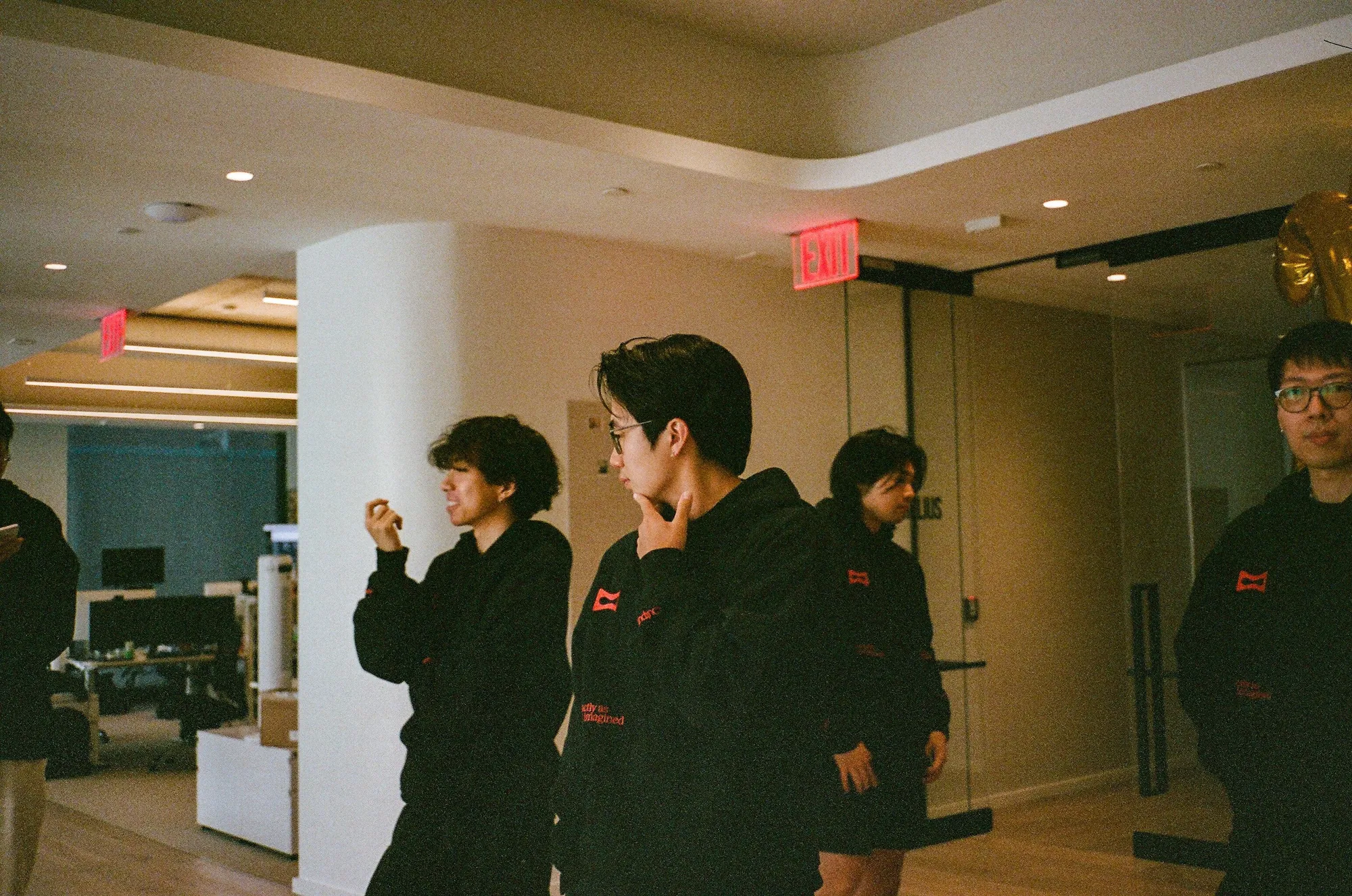
My internship at Melius has been an awesome learning experience for me as an engineer and a creative. Over the past few months, I had the opportunity to work on small and large projects that directly impacted our customers and also got to see the product scale and the team grow alongside it. I'm now wrapping up my last week and wanted to summarize everything I worked on, learned and enjoyed about Melius.
For context, Melius is an agents lab for creatives, marketing teams, and filmmakers to generate beautiful scenes and videos with access to image and video models through a single interface. Mel, our AI agent, does all the tedious work, so users are able to generate anything from their imagination without ever leaving the app.
In the past, I've worked at other startups and larger companies, but at Melius, what I loved most was being able to take on larger projects, have more ownership over the product, and wear many hats throughout the term.
One of the larger projects I got to own was building out skills and context for our agent. The idea originally came up when we wanted Mel to follow certain instructions, but only during specific sessions. When we first started brainstorming solutions, we looked at how skills and context are typically used with AI agents. Both can essentially be represented as Markdown files containing instructions for the model, but the key difference is when they're applied. Context is applied automatically on every agent turn, while skills are selectively applied when they're relevant to a specific task.
Since Melius offers a creative canvas, we also wanted our skills to go beyond the typical Markdown file. A lot of creative direction is easier to show than describe, so we designed our skills to include reference images alongside written instructions. This opens up a bunch of useful workflows: a product photography skill could include instructions and references for a specific composition, while a character skill could help maintain consistency across generations. Context, on the other hand, could capture things that should always apply, like team conventions, brand guidelines, or other preferences Mel should know on every turn.
The goal of both features is ultimately to make prompting less repetitive. You tell Mel what you want to create, context gives it what it should already know, and your selected skills provide the task-specific instructions and references it needs. A big part of building this was also figuring out the product UX and making sure these features felt intuitive within the existing creative workflow.
Working on this ended up being one of my favorite projects because it sat at the intersection of engineering, product, and creative tooling. I got to think through the agent architecture, build the underlying system, and figure out how to make it feel intuitive inside a creative workflow.
Another fun project I got to work on was the Playground. Before this, Melius started off as a creative canvas where users could create generation workflows together, make edits, and build out entire scenes in an infinite space. But not every creative task needs a full canvas, so we wanted to give users a faster way to simply type a prompt and start creating.
The Playground is a simpler, more intuitive way to create: you describe what you want, pick a model and format, choose how many variations, and hit generate. The Playground mirrored the canvas experience, making it easy for existing Melius users to bring over their work while still being approachable for new users. All the generations in the Playground are saved to each user's personal history within their team, making it easy to revisit their work later.
What I like most about how we built it is that under the hood, every Playground session is still a real canvas. Nothing you make is throwaway so the moment you want more control, you can open it in the full canvas and keep working with all of Mel's tools. That let the Playground lower the barrier to entry without cutting anyone off from the depth underneath.
This was another project that made me think hard about UX. The whole point was to remove friction for people who might be intimidated by a blank canvas, so a lot of the work came down to small product decisions: what information to show upfront, what to hide until it was needed, how users selected models and formats, and how we could make the path from an idea to a generation as simple as possible. At the same time, we wanted the Playground to fit naturally into the rest of Melius, so users could start with something simple and move into the canvas when they needed more control or more advanced workflows. (Shoutout to Winson for the designs!)
This was probably the most fun project I got to work on during my internship, and I was really happy with how it turned out. Seeing so many users using the Playground after we shipped it was especially rewarding and made all the small product and UX decisions feel worth it. Lots of learning came out of this and I couldn't have done it without Ray, who helped get it to the finish line.
Showcase of the Playground in Melius
Of course, the internship wasn't all work. Some of my favorite memories at Melius came from the things we did together outside of our usual day-to-day. We had team dinners, did yoga together, and generally spent a lot of time getting to know each other beyond work. Most of our days ended with playing a few games of Super Smash Bros.
One of the highlights was our team off-site in upstate New York leading up to launch. We spent three or four days together in a huge house, basically living and working under the same roof. We were revamping major parts of the app, fixing things that hadn't mattered as much at a smaller scale, and making sure the product and infrastructure was ready for a much larger wave of users. Everyone was jumping between whatever needed to get done, and it was really cool getting to experience that side of building and launching a product firsthand. The off-site brought us closer as a team and made the internship that much more memorable.
After all the prep, seeing Melius finally launch was really cool! Check out the launch here.
My two biggest takeaways from being on the engineering team here at Melius were developing a stronger product engineering mindset and improving my communication skills.
Overall, I'm incredibly grateful for everything I got to experience. I came into the internship hoping to grow as an engineer, but I'm leaving with a much better understanding of what it means to build a product end-to-end. From owning larger projects, to thinking deeply about UX, and working across different parts of the stack, I was constantly learning something new.
What made the experience especially memorable was the amount of ownership and trust I was given. Being on a small team meant I got to work on things that shipped directly to customers and see the impact of what I was building. More than anything, I'm grateful for the people I got to work with while building something I genuinely enjoyed working on.
I'm excited to take everything I learned at Melius with me into whatever I build next! A huge thank you to Young, Joowon, Arnav, Ray, Jahow, Alex, Winson, Samantha and Max for making these past few months such a memorable experience.
Melius is an agents lab for creatives, marketing teams, and filmmakers. It gives you access to every major image and video model through a single interface, and Mel, its AI agent, handles the tedious work so you can generate whatever you imagine without leaving the app.
The Playground is the fastest way to create in Melius: you describe what you want, pick a model and format, choose how many variations, and hit generate. Under the hood every Playground session is still a real canvas, so nothing you make is throwaway and you can open it in the full canvas whenever you want more control.
Skills and context are two ways to give Mel instructions. Context is applied automatically on every turn, so it is where team conventions, brand guidelines, and preferences live. Skills are applied selectively when they are relevant to a task, and they can carry reference images alongside written instructions, which makes them useful for things like a product-photography look or keeping a character consistent.
Interning at Melius meant owning larger projects end to end and shipping directly to customers on a small team. Alongside the engineering there were team dinners and a lot of Super Smash Bros.
August 7, 2026 • 5 Min Read
July 21, 2026 • 8 Min Read
July 21, 2026 • 8 Min Read