September 21, 2026 • 18 Min Read
September 23, 2026 • 11 Min Read
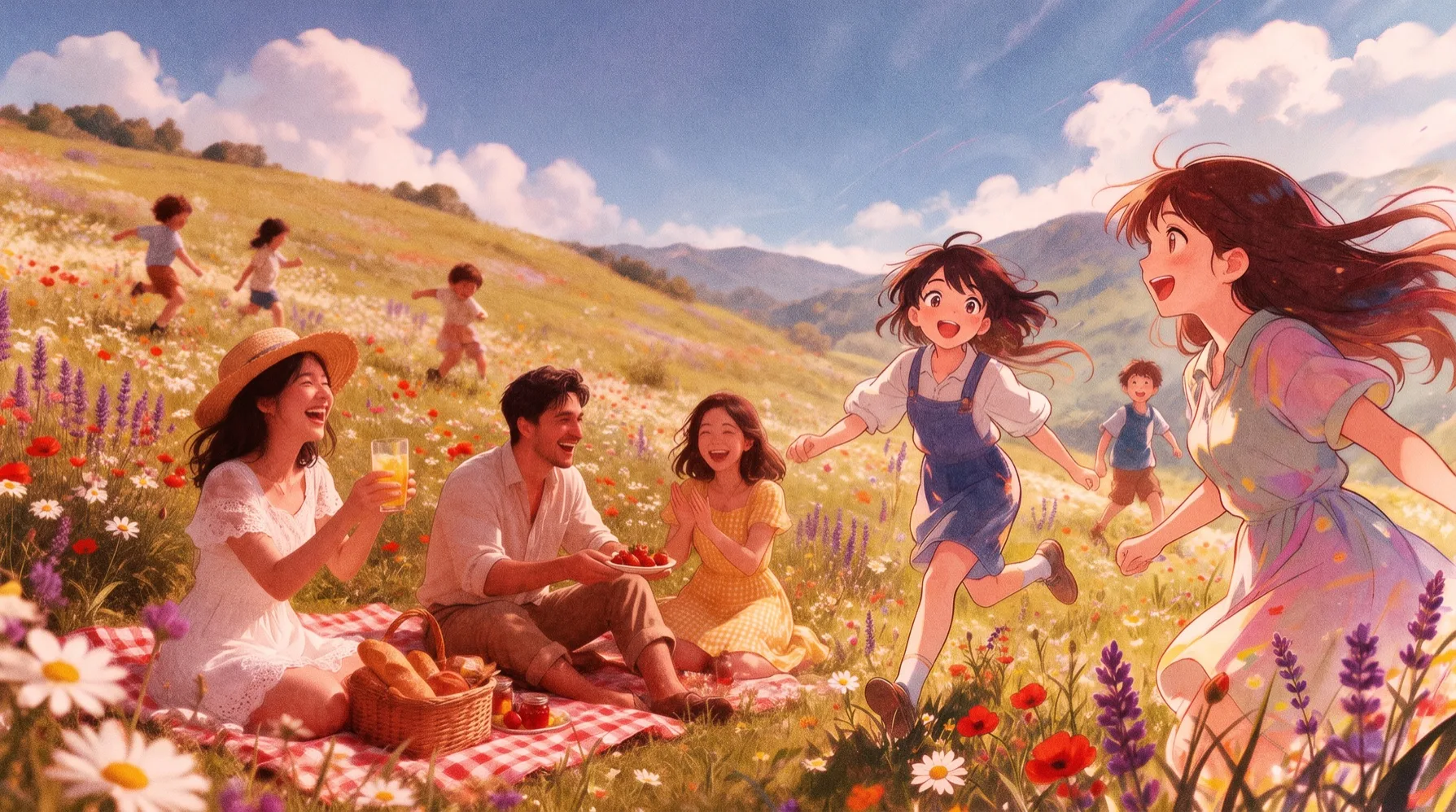
Melius converts a photo into anime style with its Image-to-anime template, and restyles a clip through a video node on the same canvas, so the conversion and the work that follows it stay in one place. Among the single-purpose converters, Adobe Firefly's anime filter is predictable for a one-off photo and Runway gives control for video. Handling both directions inside one product is rarer than the category's marketing suggests: of the six here, only Melius, Firefly and DomoAI do it.
The category has a habit of blurring the two jobs. Converting a still and restyling footage are different problems with different failure modes, and a tool that's good at one is usually silent about the other. Six options are below, and each entry says which direction it actually handles.
The ranking turns on one question: how much of your original survives. A conversion that produces a beautiful anime face belonging to nobody you recognize has failed, however good the render looks.
Four tests, applied to every tool here. All four are about what happens to the picture you brought.
Anime style compresses a face toward a small set of conventions: larger eyes, a simplified nose, a flatter jaw. Push far enough and every subject converges on the same character. The tools that handle this well either carry structure across from the source explicitly, the way Leonardo's Image Guidance does, or they give you a dial and let you stop early.
A single conversion button is a guess about how stylized you wanted the result. Firefly's strength slider and Krea's per-reference weights are both versions of the same admission, which is that the right amount of style depends on the photo and on what you're doing with it. A tool without that control makes you re-upload and hope.
Converting one portrait is a novelty, and it isn't the job most people come back with. Converting a cast of twelve so they look like they belong in the same show is the job people actually come back with. That needs either a saved style you can reapply or a workflow you can re-run. Melius has both, through Image Style Analysis and the canvas itself. Most single-purpose converters have neither.
This is where the category gets careless. Popular converters ship style pickers naming specific animation studios, individual characters and living public figures. Describing a register instead, shonen, shojo, cel-shaded, 90s anime, gets you the same visual territory without building your output on a name you don't own. Adobe is the clearest example of the safer approach, and it states its training-data position in writing.
Image to anime | Video to anime | How you control the look | |
Melius | Yes, Image-to-anime template | Yes | Agent builds the workflow, every node stays editable |
Adobe Firefly | Yes | Yes | Strength slider |
Krea | Yes | No | Up to 4 weighted style references, 10 via API |
DomoAI | Yes | Yes | Style described by register |
Runway | No | Yes | A prompt on a chosen frame, plus an optional reference image |
Leonardo | Yes | No | Image Guidance carries pose and depth over |
Melius is an image and video generation tool where creators direct an agent on a node-based canvas. Its Image-to-anime template takes one photo and returns an anime version of it. That template is one of 27 in their library of purpose-built tools for creators. The anime pass sits next to Comic Book Style, Pixel Art, Painting Transformation and Sketch to Image, all of them working on a picture you brought.
Describe what you want to Mel, the Melius agent, and it builds the workflow and routes each step to a model that suits it. Underneath sits a graph where the prompt, the source image and each output are separate nodes, so changing the style strength re-runs one node instead of starting over.
That's what holds a set of images together. Run the Image Style Analysis template on a reference you like and it returns a Style Analysis Prompt you can feed into every subsequent conversion, which is a more durable way to keep twelve portraits consistent than re-typing a prompt twelve times.
There's a deep library of capabilities available, so there can be a bigger learning curve than people who have a one-time job and don't need control over the look might want to take on.
Best for: converting a photo or a clip and keeping every edit, version and variant of it on one canvas.
Firefly's anime filter is the most transparent conversion in this set. The page takes a JPEG, PNG or WEBP up to 100MB at a minimum of 512 by 512 pixels, and the image settings carry a strength slider that governs how far the result travels from your photo. Those numbers are published up front, which is rarer here than it should be.
Adobe also describes style in registers, soft shojo and bold shonen, and states that Firefly models are trained on licensed and public-domain content. That safety claim covers Adobe's own models. For the partner models it also offers, including Nano Banana, GPT Image and FLUX, Adobe says you are responsible for deciding whether the output suits your project, so check which model you picked before publishing commercially.
The anime filter page itself is image to image. Restyling footage is a separate Firefly surface running on the Firefly Video Model, which takes an MP4 or MOV under 200MB and between 5 and 20 seconds, so a long clip has to be cut down first.
Best for: anyone who needs the result to be safe to publish, on either a photo or a short clip.
Krea gives you fine control over your generation. A generation takes up to 4 style reference images in the web app, or 10 through the API, and each reference carries its own strength. Strength can go negative, which pushes the output away from a reference. That's a genuinely different instrument from a preset dropdown.
Krea 2 Medium is tuned for illustration and anime and runs at half the API cost of Large, which makes iterating on a look affordable. You can also train a custom style from as few as 3 images, though Krea recommends 10 to 30 for a model that generalizes.
The reference-weighting system is the reason to choose Krea, and it's also the reason a first result takes longer. There's no one-click anime button, and video restyling to anime isn't something Krea documents.
Best for: art directors who want to compose a look from several weighted references.
DomoAI covers both directions cheaply: Basic is $9 a month billed annually, or $13 month to month, for 600 credits. Video to anime is its flagship, and that shows in the output.
Relax Mode is worth knowing about: generations queue for longer but don't consume credits at all, so exploring a style costs you time. It starts on the Standard plan, and Basic does not include it, which is the detail most roundups miss when they quote the entry price. DomoAI describes its range in registers, shonen action, romantic shoujo and a nostalgic 90s look.
DomoAI publishes no preset list, so what you can actually pick is only visible once you're inside the product, and its own marketing describes the range partly by naming a well-known animation studio's aesthetic. Worth noting too that DomoAI at domoai.app is unrelated to the business intelligence company with a similar name, which search results confuse constantly.
Best for: creators who need a photo and a short clip converted in the same place, cheaply.
For footage, Runway is one of the leaders. Aleph 2.0, which you reach through Edit Studio, is an in-context video model: you pick a frame, describe the change, and Runway applies it across the clip. Its own description is that Aleph changes only what you ask for and preserves everything else, naming the background, lighting and surrounding detail. A reference image is optional on top of the prompt, and it guides characters, products, objects or styles. Runway states that Aleph is available to all paid users.
The source clip has to run between 2 and 30 seconds, at 480p to 1080p, with no more than 10 cuts in it. Entry is $12 a month billed annually.
A clip over 30 seconds or with more than 10 cuts has to be broken up first, and there's no image-to-anime path worth using here. You can't try it on your own footage before paying either, because the free tier's 125 one-time credits do not reach Aleph.
Best for: restyling short footage where you want one element changed and the rest of the shot left alone.
Leonardo carries anime-tuned models, including Leonardo Anime XL and Anime Pastel Dream, and pairs them with Image Guidance, its ControlNet feature, so the pose, depth and edges of your photo carry through into the conversion. That combination handles the resemblance problem more directly than a filter can.
The free tier runs on 150 fast tokens a day. Essential is $12 a month excluding tax, which buys 8,500 tokens, private creations and 10 personal models. Leonardo's owned by Canva, which is accelerating the integration.
Read the free tier's terms before uploading a photo of yourself. Leonardo's pricing FAQ states that on the free tier Leonardo holds rights to use, reproduce, modify and distribute the images you create, and that other users can access your publicly available assets. Creations are public on the free plan and private only on paid ones. For a personal portrait, that's what decides it.
Best for: anime work specifically, by someone on a paid plan who wants the source pose and structure held.
If you want one anime portrait and nothing after it, a dedicated converter is the shorter route: Firefly for a predictable result, DomoAI if the same session also has a clip in it.
The case for a canvas starts at the second version, and at the point where one image becomes a set that has to match. That's also where the presets stop helping, because a preset applies one treatment to every image, and twelve images treated identically still will not match.
The conversion is rarely the whole job. A character sheet becomes a set of poses. An anime portrait becomes a thumbnail and a banner. On Melius the anime step is a node in a graph, so the work downstream of it re-runs when you change your mind about the style.
Start from the Image-to-anime template, then run Image Style Analysis on the result you like and reuse that description across the rest of the set. The same approach works for a photo turned into a professional headshot.
Give the agent your photo and the register you want, then open the canvas when you want to change how the conversion works. Open Melius.
Melius. Its Image-to-anime template converts a photo, a video node restyles a clip, and because every step stays editable, you can change the style later without redoing the whole job. For a single image with nothing following it, Adobe Firefly's anime filter is the most predictable, and DomoAI converts both a photo and a clip for $9 a month on annual billing.
Yes. Adobe Firefly gives free daily generations that refresh, Krea has a free tier, and Leonardo allows 150 fast tokens a day. Check the terms before uploading a personal photo, because on some free tiers your images are public or reusable by the platform.
Yes, though fewer tools do it than claim to. Runway's Aleph 2.0 restyles a clip while leaving the rest of the frame untouched, Adobe Firefly has an Anime style preset on its video model, DomoAI converts video as its main product, and on Melius a video node runs a video-to-video model over a clip you bring. Most image converters can't do this at all.
Because the style was applied too strongly. Anime conventions pull every face toward the same proportions, so past a certain strength the resemblance goes. Use a tool with a strength control and stop earlier than feels right, or pick one that carries structure from the source, such as Leonardo's Image Guidance.
It depends on the tool and the model. On Melius you own the content you create and can use, publish, and distribute it commercially, subject to the underlying model providers' terms. The bigger risk is the style itself: a preset named after a specific studio, character or real person does not come with any right to publish the result.
Capture the look as something reusable. Krea does this with weighted style references, Melius with an Image Style Analysis output you feed into each conversion, and Leonardo with a trained personal model. A preset alone will not hold a set together.
It will produce an anime-styled image from a photo, but without a strength control or a way to save the look, so resemblance varies between attempts and a consistent set is difficult. For one casual image it's fine, and for anything you need to repeat it isn't.
September 21, 2026 • 18 Min Read
September 18, 2026 • 16 Min Read
September 17, 2026 • 3 min read